
Introduction
Plastic surgery is no longer a topic people whisper about. Across Pakistan, more men and women are exploring cosmetic and reconstructive procedures to improve their appearance, correct physical concerns and feel more confident in their bodies. If you are considering surgery, it helps to understand which procedures are most popular, what they involve and how to find the right plastic surgeon in Lahore.
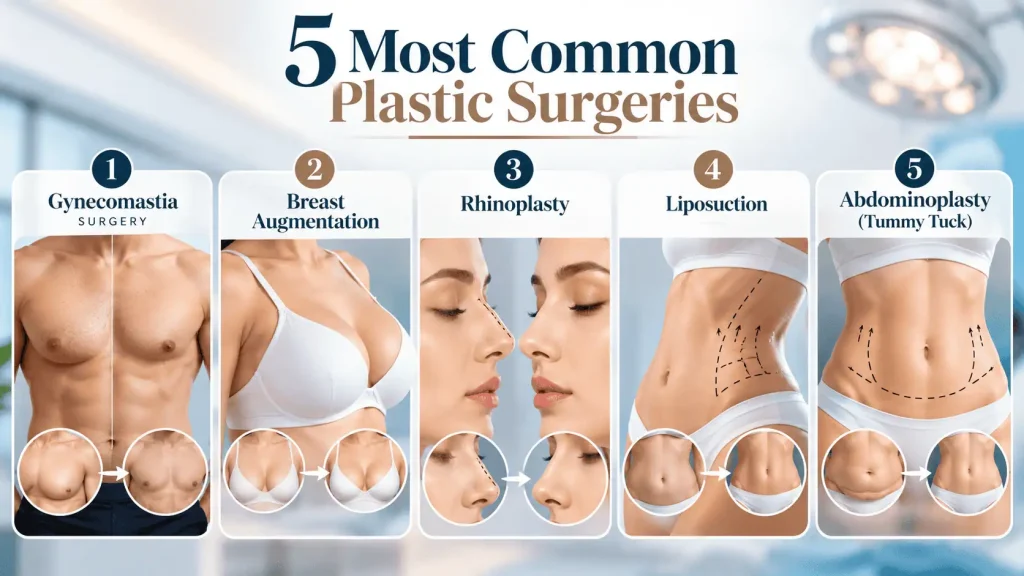
In this guide, we cover the five most common plastic surgeries, who they suit and what to expect.
1. Rhinoplasty (Nose Reshaping)
Rhinoplasty is one of the most requested facial procedures in the world, and Pakistan is no exception. It reshapes the nose to improve its size, angle, tip or overall balance with the rest of the face. It can also correct breathing problems caused by a deviated septum, in which case it is often combined with septoplasty.
Who is it for? People unhappy with the shape of their nose, those with a bump, a wide tip or asymmetry, and those with breathing difficulties or injury-related changes.
What to expect: The procedure usually takes one to three hours under general anaesthesia. Swelling and bruising settle over the first few weeks, though the final shape can take up to a year to fully refine.
2. Liposuction (Body Contouring)
Liposuction removes stubborn pockets of fat that do not respond well to diet and exercise. Common areas include the abdomen, flanks, thighs, hips, arms, back and under the chin.
Who is it for? Adults close to their ideal weight with localised fat deposits and reasonably good skin elasticity. Liposuction is a body-contouring procedure, not a weight-loss solution.
What to expect: Most patients wear a compression garment for several weeks to control swelling and help the skin settle. Results become clearer as swelling reduces over a few months, and they last best when a stable weight is maintained.
3. Gynecomastia Surgery (Male Breast Reduction)
Gynecomastia is the enlargement of breast tissue in men. It is far more common than most people realise and can affect teenagers, young adults and older men. It may be caused by hormonal changes, certain medications, weight gain or sometimes no clear reason at all.
Because gland tissue does not respond to exercise, surgery is often the most effective solution when the condition is persistent. Depending on the case, the surgeon may use liposuction, direct gland removal or a combination of both to create a flatter, more masculine chest.
Who is it for? Men with persistent chest enlargement who feel self-conscious, avoid swimming or tight clothing, or have not improved with lifestyle changes. A consultation is important to confirm the cause first.
What to expect: Most men return to desk work within about a week, with a compression vest worn for a few weeks. Strenuous exercise is usually resumed gradually after the surgeon’s clearance.
4. Breast Augmentation and Breast Lift
Breast surgery is among the most common cosmetic procedures for women, and two options are often discussed together.
Breast augmentation uses implants (or sometimes fat transfer) to increase breast size, improve symmetry or restore volume lost after pregnancy or weight loss.
Breast lift (mastopexy) raises and reshapes sagging breasts by removing excess skin and repositioning breast tissue. It does not significantly increase size on its own, so many patients choose a lift with augmentation for both shape and volume.
Who is it for? Women who feel their breasts are too small, uneven or have lost firmness due to pregnancy, breastfeeding, ageing or weight changes.
What to expect: Recovery typically involves a few days of rest, a supportive surgical bra and gradual return to normal activities over several weeks. Your surgeon will discuss implant type, size, placement and scarring during your consultation.
5. Abdominoplasty (Tummy Tuck)
A tummy tuck removes excess skin and fat from the abdomen and tightens weakened abdominal muscles. It is especially popular after pregnancy or major weight loss, when diet and exercise cannot tighten loose skin or separated muscles.
Who is it for? Adults with loose abdominal skin, a protruding lower belly or muscle separation (diastasis recti). It is generally best for women who have completed their families and for people at a stable weight.
What to expect: This is a larger procedure with a longer recovery, often two to four weeks before returning to most daily activities. A scar is placed low on the abdomen and is usually hidden by underwear or swimwear.
How to Choose a Plastic Surgeon in Lahore
Surgery is only as safe and satisfying as the person performing it. When searching for a plastic surgeon in Pakistan, consider the following:
- Qualifications: Look for a surgeon with recognised specialist training in plastic and reconstructive surgery and proper registration with the Pakistan Medical and Dental Council.
- Experience: Ask how often they perform your specific procedure and request before-and-after photos of real patients.
- Facility: Choose a hospital or accredited surgical centre with qualified anaesthesia and emergency support.
- Honest consultation: A good surgeon explains risks, limits and alternatives rather than promising perfection.
- Aftercare: Make sure follow-up visits are included and that you know whom to contact if concerns arise.
Final Thoughts
Rhinoplasty, liposuction, gynecomastia surgery, breast augmentation and lift, and tummy tuck remain the most common plastic surgeries because they address concerns that diet, exercise and time cannot always fix. Every procedure carries risks and every body is different, so the best first step is an in-person consultation with a qualified surgeon.
If you are ready to explore your options, book a consultation with an experienced plastic surgeon in Lahore to discuss your goals and get a personalised plan.