
Introduction
Many men quietly struggle with a soft, rounded chest that makes shirts fit badly and keeps them out of the pool or gym. If you are searching for ways to reduce male breast fat, you are far from alone. The good news is that, in many cases, the right habits can help you lose chest fat and build a firmer, flatter look. The key is understanding what is actually causing the problem.
First, Understand the Cause: Fat vs Gynecomastia
Not all chest enlargement in men is the same, and the right approach depends on which type you have.
- Pseudogynecomastia (chest fat): Extra fat stored in the chest, usually linked to overall weight gain. This type often improves with fat loss.
- True gynecomastia: Enlargement of the glandular breast tissue itself, often from hormonal changes, puberty, ageing, certain medications or health conditions. This tissue is firm or rubbery, often sits under the nipple and may be tender. Exercise and diet may not shrink it.
- A mix of both: Many men have fat and gland tissue together.
A simple clue is that fat feels soft and spread out, while glandular tissue feels like a firm disc behind the nipple. Only a doctor can confirm which you have, so a proper check is worthwhile before spending months on the wrong plan.
Can You Spot-Reduce Breast Fat?
Unfortunately, no. Doing hundreds of push-ups will not burn fat only from your chest. Your body loses fat from across the whole body in a pattern largely set by genetics. To lose breast fat, you need an overall fat-loss approach, with chest exercises used to build muscle underneath so the area looks firmer.
6 Ways to Reduce Chest Fat
1. Create a Moderate Calorie Deficit
Fat loss comes down to consistently eating slightly fewer calories than you burn. Aim for a gradual, sustainable deficit rather than crash dieting, which can cost muscle and rarely lasts. Focus on lean protein, vegetables, fruit, legumes and whole grains, and keep portions of fried foods, sweets and sugary drinks in check.
2. Prioritise Protein
Protein keeps you full, protects muscle while you lose fat and supports recovery from training. Good sources include eggs, chicken, fish, lean meat, dal, chickpeas and yoghurt.
3. Do Regular Cardio
Walking, cycling, swimming, jogging or interval training help increase calorie burn and support overall fat loss. Aim for consistent weekly activity that you can maintain over months, not just weeks.
4. Strength Train the Chest and Upper Body
Strength training will not remove fat from one spot, but it builds the muscle beneath it, which improves the shape of your chest as the fat comes down. Include:
- Push-ups and incline push-ups
- Bench press or dumbbell press
- Chest flyes
- Rows and shoulder presses for balanced upper-body development
Train two to four times a week and increase difficulty gradually.
5. Limit Alcohol and Improve Sleep
Alcohol adds extra calories and can make fat loss harder. Poor sleep and high stress can also affect appetite and hormones. Seven to nine hours of sleep and a manageable stress level support every other effort you make.
6. Review Medications and Substances
Some medications, anabolic steroids, and certain substances are linked to breast tissue growth in men. Never stop prescribed medicine on your own, but do discuss any concerns with your doctor. If you use steroids or supplements of unknown content, stopping them and seeking medical advice is important.
Does the Fat Really Go? What Results to Expect
If your chest enlargement is mainly fat, steady weight loss usually reduces it over a few months. If you have true gynecomastia, you may notice less fullness overall but a firm gland tissue often remains. Expecting realistic results will keep you motivated and prevent frustration.
When to See a Doctor
Book a medical assessment if you notice:
- A hard lump in one breast, skin changes, nipple discharge or nipple retraction
- Pain or tenderness that does not settle
- Rapid or one-sided enlargement
- Enlargement that began without weight gain or after starting a new medicine
These are not necessarily serious, but they need proper evaluation to rule out underlying hormonal issues or, rarely, other conditions.
When Surgery Is the Better Option
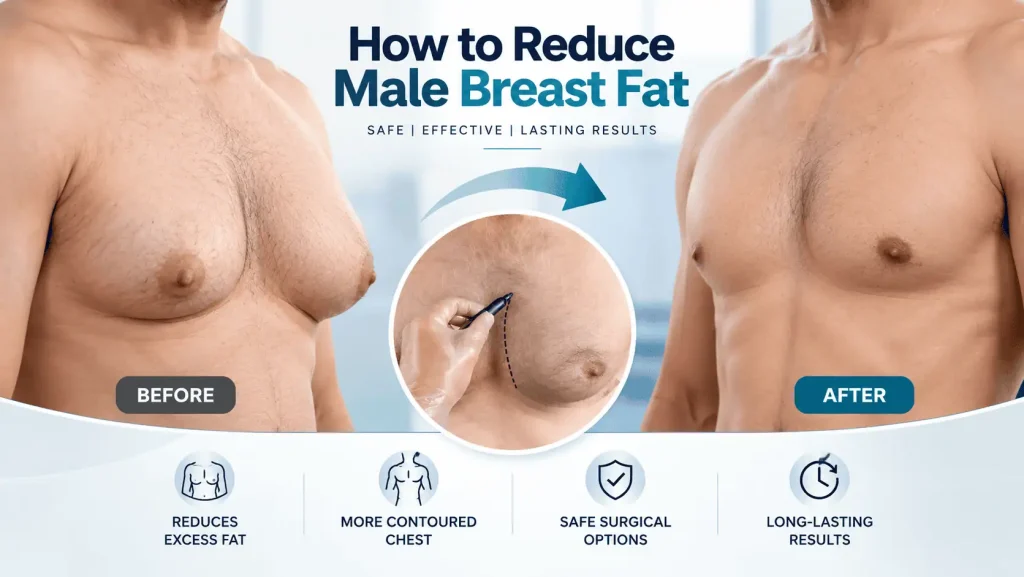
If you have followed a healthy lifestyle and your chest is still enlarged, the cause is likely glandular tissue. In that case, many men choose gynecomastia surgery to remove man boobs permanently. Depending on your case, a surgeon may use liposuction for fat, gland excision for firm tissue, or both, through small incisions. Results are usually long lasting, particularly when weight stays stable.
A consultation with an experienced plastic surgeon helps you understand whether surgery is appropriate, which technique suits you and what recovery looks like.
Final Thoughts
To reduce chest fat, combine a modest calorie deficit, enough protein, regular cardio and chest-focused strength training, and give it time. If your chest does not respond because the issue is glandular, you have effective medical and surgical options. Start with a proper diagnosis, stay consistent and do not be embarrassed to ask for help.
If you are ready to reduce male breast fat for good, schedule a consultation with a qualified plastic surgeon to find out what is causing it and which treatment is right for you.